
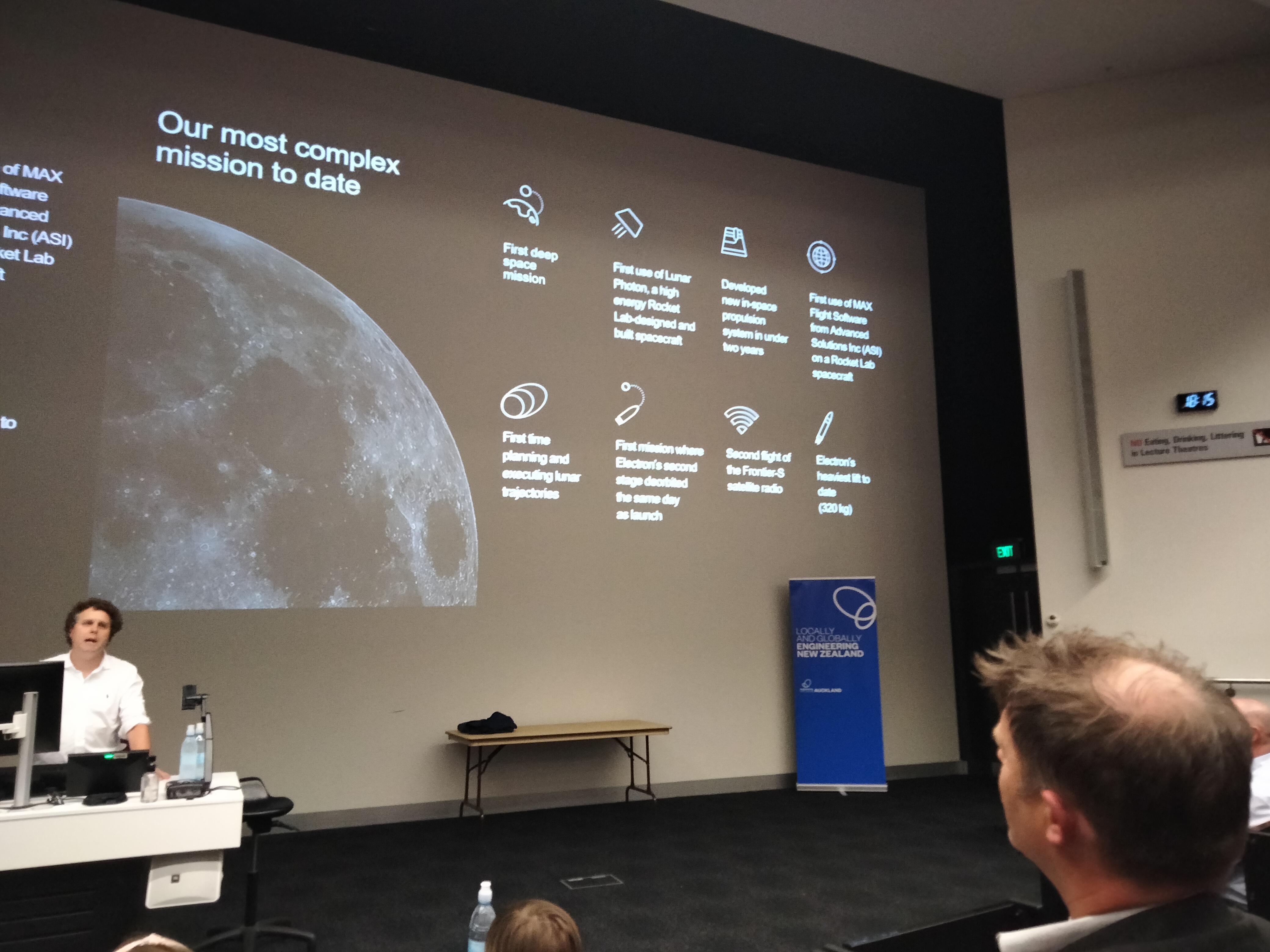
Peter Beck started Rocketlab in 2006. As a kid he already played with toy rockets and was smitten by the idea of space exploration. When he had an office at IRL in Parnell in Auckland, Sean Simpson who founded Lanzatech and Peter did many un-OSH compatible experiments. One being Peter trying some of his early rocket fuel in the pipes of the IRL building from bottom to Sean’s top office space. But let’s get back to some of the early days of fund raising for Peter.
He presented on his nascent idea as early as 2006 at the AANZ event in Orakei Bay Centre in Auckland. At the time I worked for Callaghan Innovation, the NZ R&D supporting agency. And was lucky to be in the room when Peter walked on stage in shorts and with flip flops. Over 100 Angel and Venture Capital investors in the audience were all kitted up in ties. Then Peter said “I am gonna build a billion dollar company. And I am going to tell you how…”. And off he went and told us. Very few of the people in the audience believed Peters Big Hairy Audacious Goal (BHAG). The US at the time had about 20 time slots to launch a rocket per year. Their congested air space did not allow for more launch windows. In NZ Peter told us, just call the head of the CAA and ask if there is a slot next week. And there probably is … NZ’s two degrees of separation, being at the edge of the world (where innovation happens – not at the centre according to Kevin Roberts, former CEO of Saatchis) actually was and still is a competitive edge for NZ. Little red tape, agile government and decision making, and a deep desire to get stuff done… Peter is a master at this.
Fast forward time, the two IRL flat mates, Sean from Lanzatech and Peter from Rocket Lab both got discovered by Vinod Khosla and Stephen Tindall. Vinod Khosla, co-founder of Sun Microsystem and Khosla Venture is one of the biggest names in black swan investments. From memory Lanzatech and Rocket Lab were some of Vinod’s first non-US investments. Again, I was very lucky to be at an event with Stephen Tindall, Vinod Khosla, Sean and Peter, in their very early days in downtown Auckland.
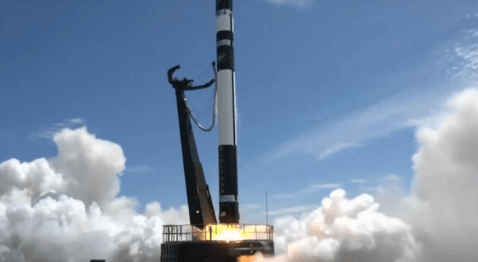
In 2018 RocketLab launched the first rocket from Mahi Peninsula on the East Coast and wrote history, by becoming the smallest nation on the planet to successfully be able to launch rockets into space.
But, let’s get back to 2023 and Peter’s inspiring talk to over 300 young engineers at the University of Auckland on 25. October 2023. I sat next to Eric Dahlstrom from Spacebase who co-designed the International Space Station and provided amazing background commentary. ..
Since those rock’in founding days of 2006 Rocket Lab has since developed the Electron launch vehicle, which is designed to place payloads of up to 300 kg into low Earth orbit. Rocket Lab has launched missions for customers including the National Reconossaince Office, the Swedish National Space Agency, and the U.S. Defense Department. Rocket Lab launched NASA’s lunar mission CAPSTONE and Gateway Pathfinder mission as well.
But back to his presentation for IPENZ young engineers at the University of Auckland on 25. October 2023.
After a wild tender to send NASA’s Capstone probe to the moon, Peter got a really early morning call from NASA that they won this hugely strategic tender. At the time, he and the Rocket Lab crew had no idea how to actually make this happen. They not only needed to double the “umpff” of the current Electron rocket but increase the payload. from 50 to over 300kg. Despite burning the midnight oil for a long time, the project ran behind schedule. Not only a bit, but over a year. To the point that NASA was close to pull the rug underneath Rocket Lab’s funding. However, the team pulled their socks up, build the Mahi launch pad in 9 months and learnt to not explode the rocket in their trials. You can find a lot more detail on Capstone mission to assist NASA to return humans to the moon here.
The payload is only 2% of the whole weight of the full mission. This includes the Electron rocket, the Lunar Photon and the NASA capstone.
On June 28, 2022, Rocket Lab launched a CubeSat to the Moon – a pathfinding mission to support NASA’s Artemis program which will land the first woman and first person of color on the Moon.
Using Rocket Lab’s Electron rocket and new Lunar Photon upper stage, Rocket Lab sent the Cislunar Autonomous Positioning System Technology Operations and Navigation Experiment (CAPSTONE) CubeSat on a highly efficient transfer orbit to the Moon. CAPSTONE is owned and operated by Advanced Space in Westminster, Colorado, for NASA.
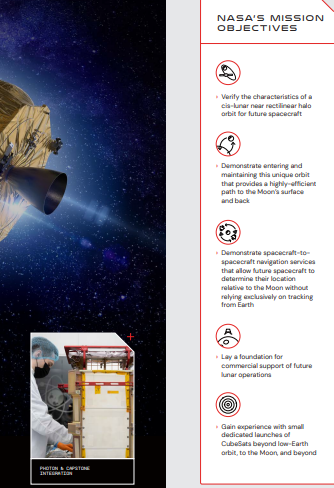
Image: NASA’s lunar mission objectives
Before the Rocket Lab mission to the moon, NASA has been last to the moon in the 1960s. It is pretty amazing that a company from little New Zealand has been able to achieve this feat. Kiwi Ingenuity, grit and shear determination by the whole team helped to achieve this.
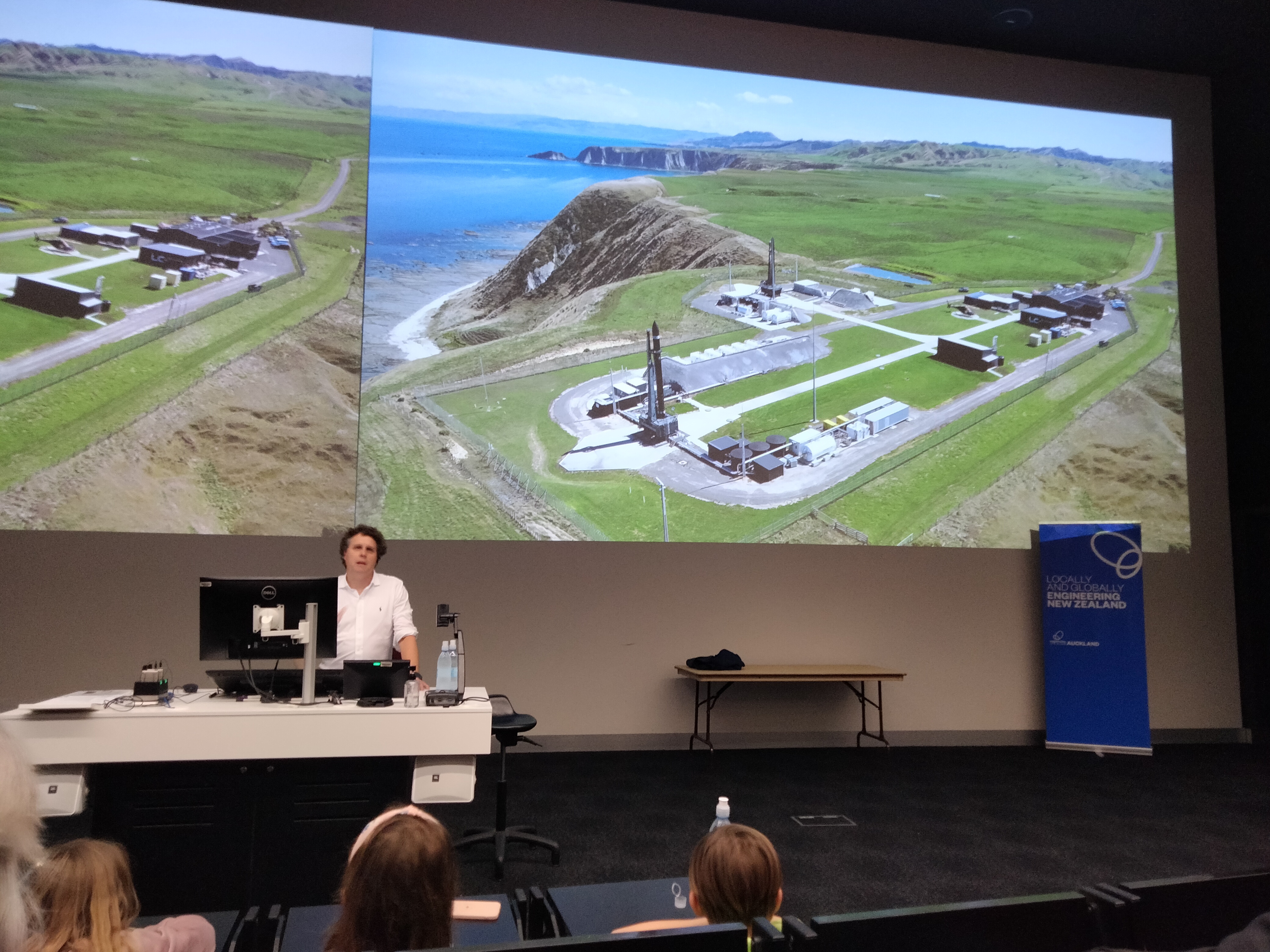
One example is the building of the launch pad at the Mahi Peninsula. Normally it takes about three years to build a launch pad. The Rocket Lab team did this is about nine months.
To put this into context, NASA’s last mission to the Moon was Apollo 17, which launched on December 7, 1972 and returned to Earth on December 19, 1972.
However, NASA is planning to return to the Moon with its Artemis program, which aims to land the first woman and the first person of color on the Moon by 2025. The first Artemis mission, Artemis I, launched on August 29, 2022 by Rocket Lab and is currently orbiting the Moon. Artemis II, the first crewed Artemis mission, is scheduled to launch in 2024, and Artemis III, the mission that will land astronauts on the Moon, is scheduled to launch in 2025.
Peter explained in quite some detail how they managed the constraints of amount of fuel, overheating, mission the moon target. Everyone in the audience was gripped by the intensity of the effort and sacrifices the Rocket Lab team put in to make the NASA mission a success.
To explain this further Peter explained the three stage system.
THE ROCKET
The Electron launch vehicle was CAPSTONE’s ride to space. Launching since 2017, Rocket Lab’s Electron rockets have delivered 100+ satellites to orbit on time and on target. On June 28, 2022, Electron provided the Lunar Photon upper stage and CAPSTONE CubeSat with the initial ride to low Earth orbit before the journey began to the Moon.
THE SPACECRAFT
Once Electron reached low Earth orbit, our Lunar Photon upper stage took the reigns to deliver the CAPSTONE spacecraft onto its highly efficient ballistic transfer orbit to the Moon. As part of the mission, Lunar Photon, with Advanced Space’s CAPSTONE attached, orbited the Earth in elliptical phasing orbits over six days to build up velocity for a Trans Lunar Injection (TLI) to deploy CAPSTONE into the deep space, low energy transfer orbit to the vicinity of the Moon.
THE PAYLOAD
CAPSTONE will be the first satellite to operate in a Near Rectilinear Halo Orbit around the Moon. CAPSTONE aims to reduce risk and validate operational concepts for future missions using the same lunar orbit.
In this orbit, CAPSTONE will orbit together with the Moon as it orbits Earth and will pass as close as 1600km and as far as 70000km from the lunar surface. About the size of a microwave oven, this 25kg satellite has an onboard communications system capable of determining how far CAPSTONE is from NASA’s Lunar Reconnaissance Orbiter and how fast the distance between the two spacecraft is changing. This inter-spacecraft information will be used to demonstrate the software for autonomous navigation, CAPS, that, when fully demonstrated, will enable future missions to determine their location without having to rely exclusively on tracking from Earth.
Below is a description on how they calculated, recalculated and redrawn the Capstone Mission until ultimate achievement of their objectives …


Image: Slingshot trajectory of Rocket Lab’s Capstone Mission
Once they launched off Capstone, Rocket Lab even scarified the opportunity to let the Photon capsule to carry on to Venus. They decided to be on stand-by as NASA’s Capstone module had initial problems.
Peter shared is vision that he and his team like to fly by and probe the Venus atmosphere. Rather than joining the Billionaire’s race to Mars. He also re-iterated that he is trying to build a sustainable, multi generational business with Rocket Lab. And hopes that it will outlive the billionaire leader dependent competitors SpaceX (Elon Musk) and Blue Origin (Jeff Bezos).
- According to Space Impulse here are the 10 Rocket Launch Companies to look for in 2023
- 1. SpaceX (Private Space Exploration)
- 2. Blue Origin (Aerospace Manufacturing and Spaceflight Services)
- 3. United Launch Alliance (Rocket Launch Venture)
- 4. Arianespace (Rocket Launch Services Provider)
- 5. Rocket Lab (Space Technology Company)
- 6. Boeing Defense, Space & Security (Space Launch Company)
- 7. Orbital Sciences Corporation (Launch and Supporting Services)
- 8. Virgin Group’s Virgin Galactic & Virgin Orbit (Commercial Spaceflight / Small Satellite Launch Company)
- 9. China Great Wall Industry Corporation (Commercial Launch Services)
- 10. Relativity Space (Space Technology Company)
Isn’t is amazing that Rocket Lab is in the Top 5 of rocket launch companies world wide. How cool….
Peter answered many questions by the audience, let of by several 10 or 12 year old kids. Patiently Peter responded to all sorts of questions. The only question he did not respond to in detail was “what is the mojo of your rocket fuel”. I thought that was fair enough… All in all in what a very special evening, with a a very inspiring New Zealander from buzzling Invercargill.
It is amazing how many world first’s Aotearoa Kiwi visionaries have achieved so far and no doubt will keep achieving …

If you like to listen to the full presentation check out IPENZ’s recording of Peter’s presentation.
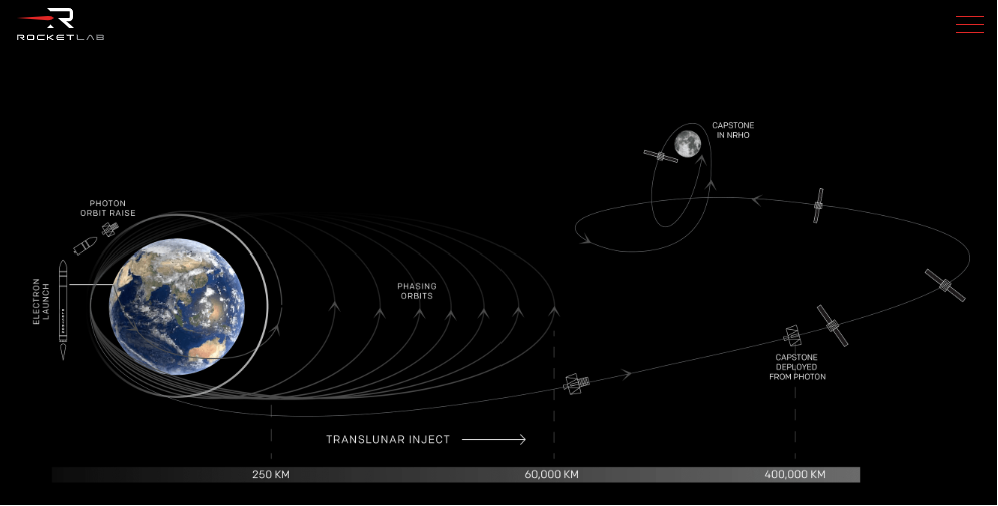
Image: Rocket Lab’s Capstone mission to the moon – slingshot translunar inject
 Northland Innovation Centre