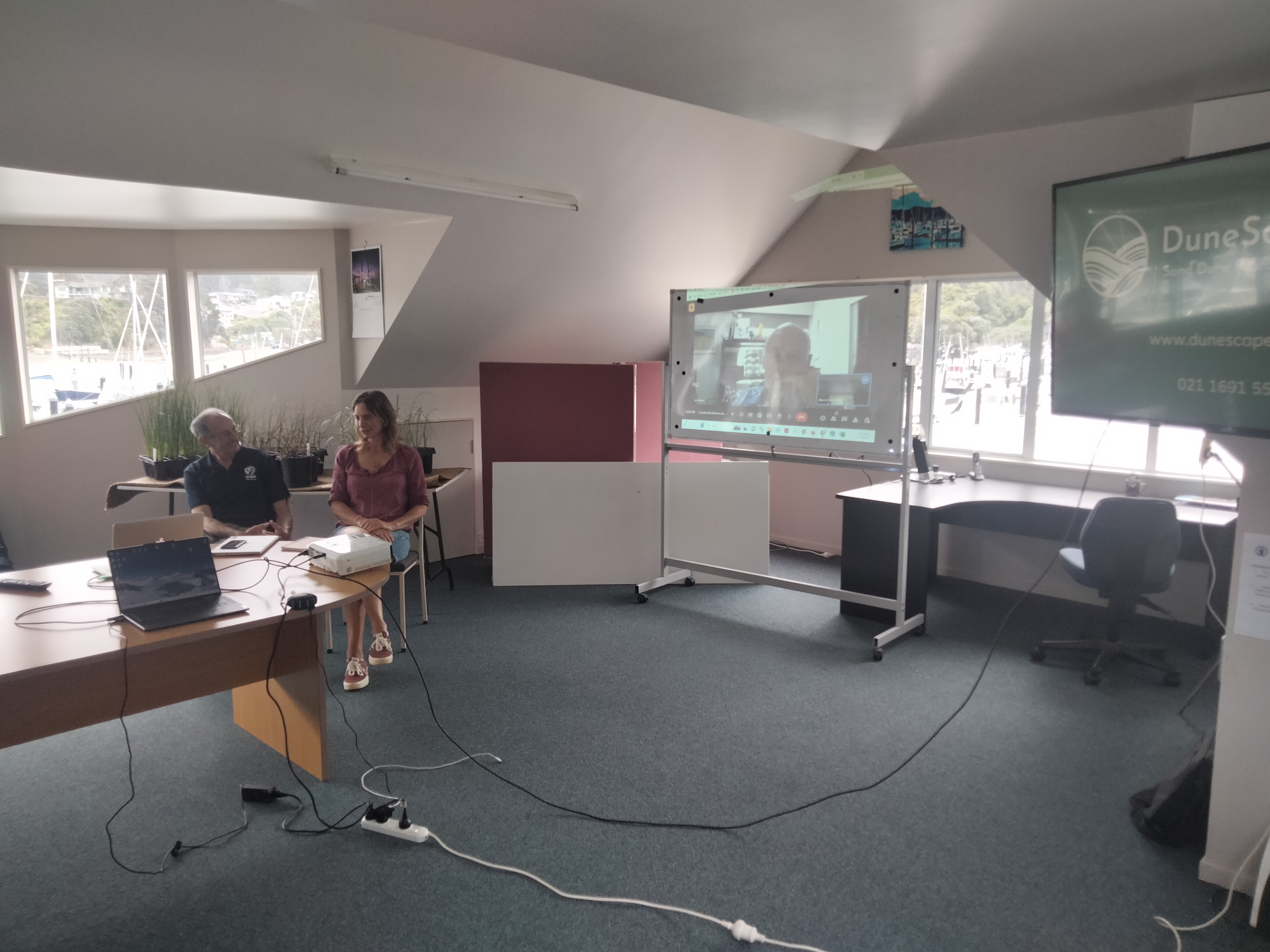
On 2. Dec 2023 the charitable Trust Tutukaka Marina hosted NIC for the Xmas Edition of the “Ocean+Climate” Series. A big thanks to our hosts. The event made a sizeable koha donation to the Tutukaka Youth Sailing Club as the result of close to 30 participants’ koha. Many thanks again for this and for your informed & awesome questions.
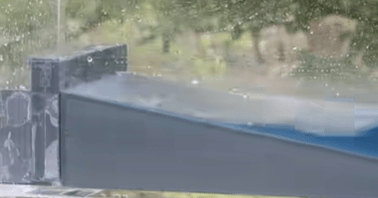
To start, please watch this wave tank simulation of a beach to learn about the basics of coastal dynamics.
Our topic was “coastal resilience of East Coast Beaches in Northland”. Here is the recording of the series.
Three Speakers volunteered their time:
- Dr Andrew Forsythe, Chief Scientist at NIWA Bream Bay: Climate Change and Coastal Processes
- Jim Dahm, Coastal Scientist since 35years, from Eco Nomos in Coromandel (via video link): Coastal Resilience
- Amy Bazeley, Ecologist from Dune Scape in Ngunguru: Dune Restoration
Below you will find relevant media resources including the slides from each presenter, the overall video recordings and links to the quoted research, policies and use cases.
DISCLAIMER
Please note that the author, Martin, is not an expert in coastal resilience nor in climate adaptation. The information provided need to be fact checked and verified. All the below is done on a volunteer and best effort basis. Do not base any decisions on the information in this blog or my slide deck. Please liase with the relevant experts if you like to find out more. Many thanks for your interest in this topic.


First draft: 2. Dec 2023, last updated: 10. Dec 2023 by Martin Knoche.
After all this introductory stuff, let’s launch right into it …
We were started off with the local kaumatua Harry with a wonderful karakia. Followed by …
Andrew from NIWA on Climate and Coastal Processes
Climate Science can be communicated in multiple ways. Often it can be somehow daunting and partially depressing. The Climate narrative has to change to something positive and covering the climate opportunities.
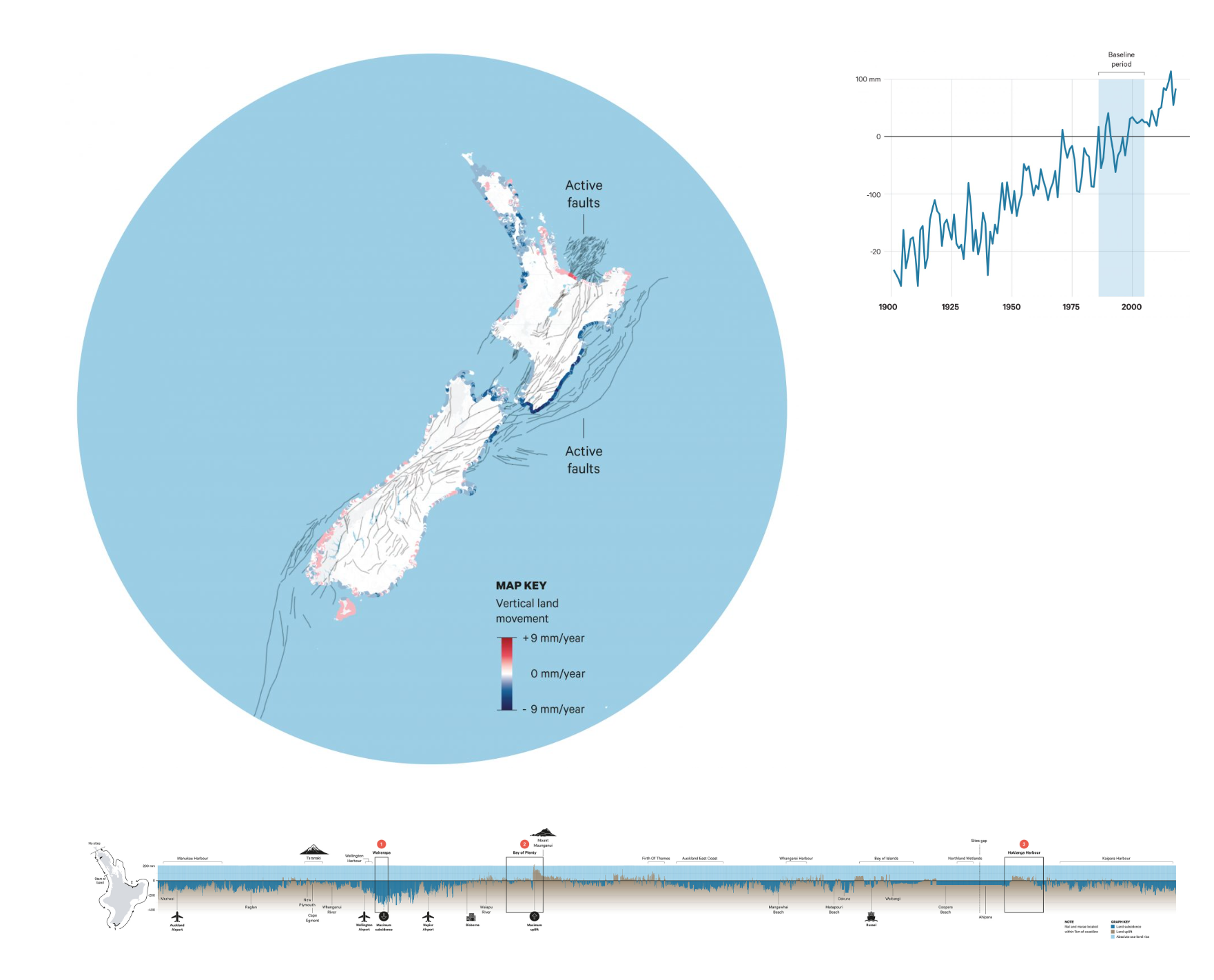

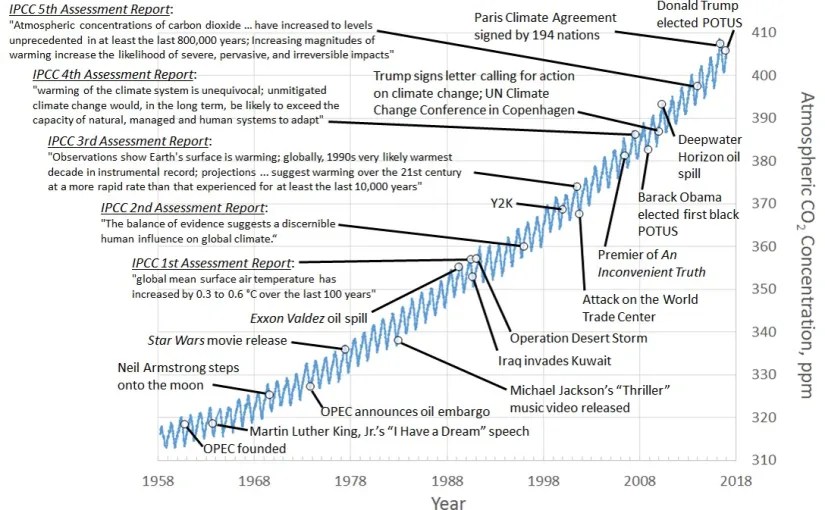
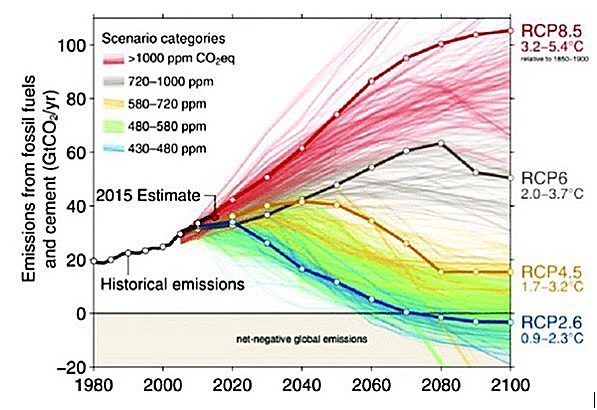
Fig: NZ Sea Level Rise, Keeling Curve, IPCC BAU scenarios incl 8.5 deg by 2100
(Sources: R Levy, NIWA, Keeling, IPCC)
By doing so buy-in is likely to be better and affirmative action more ensured. Andrew helped to first cover key climate facts and figures and then moved on to recommendations each of us can (and should) do every day.
Jim from Eco Nomos on managing coastal erosion on the east coast by working with nature
To work out what is best for your beach, your beachfront property, your local beachfront park you first need to understand some basics on coastal processes. Jim gave a very good introduction on what is happening on NZ’s East Coast beaches vs. the more rugged West Coast Tasman Sea hammered beaches. He explained that on East Coast beaches like the Tutukaka Coast the beachline moves backwards and forwards. It has been doing this since for centuries (the beaches only formed since 7500 years ago – the period of time they stopped building seaward and have been in the present dynamic equilibrium varies) , and in the absence of climate change would have continued to do so for many more centuries. Jim emphasized that erosion with these processes is temporary – and that is the dominant form of erosion we are presently dealing with on the east coast. Permanent erosion will however come with sea-level rise – probably at least 20-30m permanent erosion for every 1m of sea-level rise. So, we are presently in the easier management days, it’s going to get much harder.
When humans build permanent structures in these naturally fluctuating zones, those structures can be impacted. It doesn’t matter if it is the sand castle you build as a kid or the $1-2 million mansion you build as an adult. The process remains the same. Here is a short video from the Dune Restoration Trust which demonstrates the basic coastal processes.
Once you understand the band or range an East Coast beach moves, you can make sensible plans where to put a structure like a house. Jim gave some amazing examples of where houses were lost to the sea, where areas were shifting by tens of meters backwards and forwards. The key message is, this is natural. And any human engineering is not going to change these natural processes. The old approach after the second world war in NZ was to trying to fight these processes. Houses were built close to the wire, sometimes much too close. The results in some instances were catastrophic to the owner, but natural to the beach. See this short video on these past approaches.
So what does this mean?
Anyone who lives near the ocean has seen the ocean tame like a pond and the next day wild as a roaring beast, and anything in between. All this is how the moana, our ocean is. It is a bit like us, we have good and bad days. That is the same for the ocean. So when the ocean hits your beach on a bad day, you better go out of the way. If you are trying to fight the moana, it is clear who is going to be the winner. So we better be smart. Jim covered a few of the smart options we have for East Coast beaches.
Option One (I) is, we accept this oscillation of the beach and dune, and get on with it. This best applies where houses and other important infrastructure are already landward of the zone of shoreline fluctuations.
Dune restoration is also useful for managing erosion where there is an adequate natural buffer between houses and the sea. Natural dunes have been significantly altered by humans, damaging both the ecology and the natural dune repair function. Jim indicated that with current knowledge we can now restore even very damaged dunes and gave an illustrated example. Amy also gave further details of dune restoration in her presentation. .
Jim emphasized that dune restoration is not about “stopping erosion”. Restored dunes will still undergo natural coastal erosion and no planting will (or is designed to) stop this. But well-designed restoration will restore the natural dune repair processes that are critical to natural dune repair after erosion, as well as restoring damaged ecology.
Option Two (II) is to find relevant ways to work with the natural forces of the ocean. (see video to explain these processes).
For example, if the width of natural dune protection is not adequate, the dune be dune can be widened landward. Once the protective dune is wider than the natural shoreline fluctuations and planted in the right vegetation, it will naturally self-repair after the present temporary erosion.
Jim also highlighted how it is possible to mitigate erosion by assisting the process of natural dune repair – a process known as push-ups where sand is moved from the beach to the dune. Jim emphasized that this work is not needed in most situations. And it requires careful design and timing to be useful and to avoid damaging the environment. However, it can be very useful in some situations. Jim presented successful examples where otherwise houses would have had to be retreated landward or a rock wall required. Designed and conducted appropriately, the environmental effects of these push-ups are minor and temporary (i.e. no longer evident within a few days).
Jim noted there were also other environmentally appropriate options (known as soft options) that can be used. These include the setbacks and development controls which most councils on the east coast now have in their plans. These setbacks ensure owners understand the issues when they purchase beachfront. The controls also act to reduce risk as existing houses are replaced. But they take time to reduce risk, as they only apply when houses are replaced or upgraded.
Jim noted there are also other environmentally soft options like beach nourishment and sand retention structures which he did not have time to cover in any detail. However, he noted these are generally much more expensive and difficult and are not likely to be cost-effective at most exposed east coast sites in the near future.
Jim did not have time in his presentation to discuss historic hard option approaches like sea walls. However, in the Q+A he indicated these are now disfavoured as they have a variety of serious environmental and other effects. He noted these approaches are now very difficult to obtain resource consent for (except for important infrastructure). Also, with current national policy private benefit structures need to be located on private property if there is no wider public benefit – which there generally is not.
Please see Jim’s slides of this presentation and a full workshop slide deck for further reference.
Amy from Dune Escape on Dune Restoration
There are several native plants which are very good in sand build up and dune restoration. These are Spinefex, Pingao and Wiwi. See the progress from the ocean via zone 1 – sandbinders to zone 4 – forest.
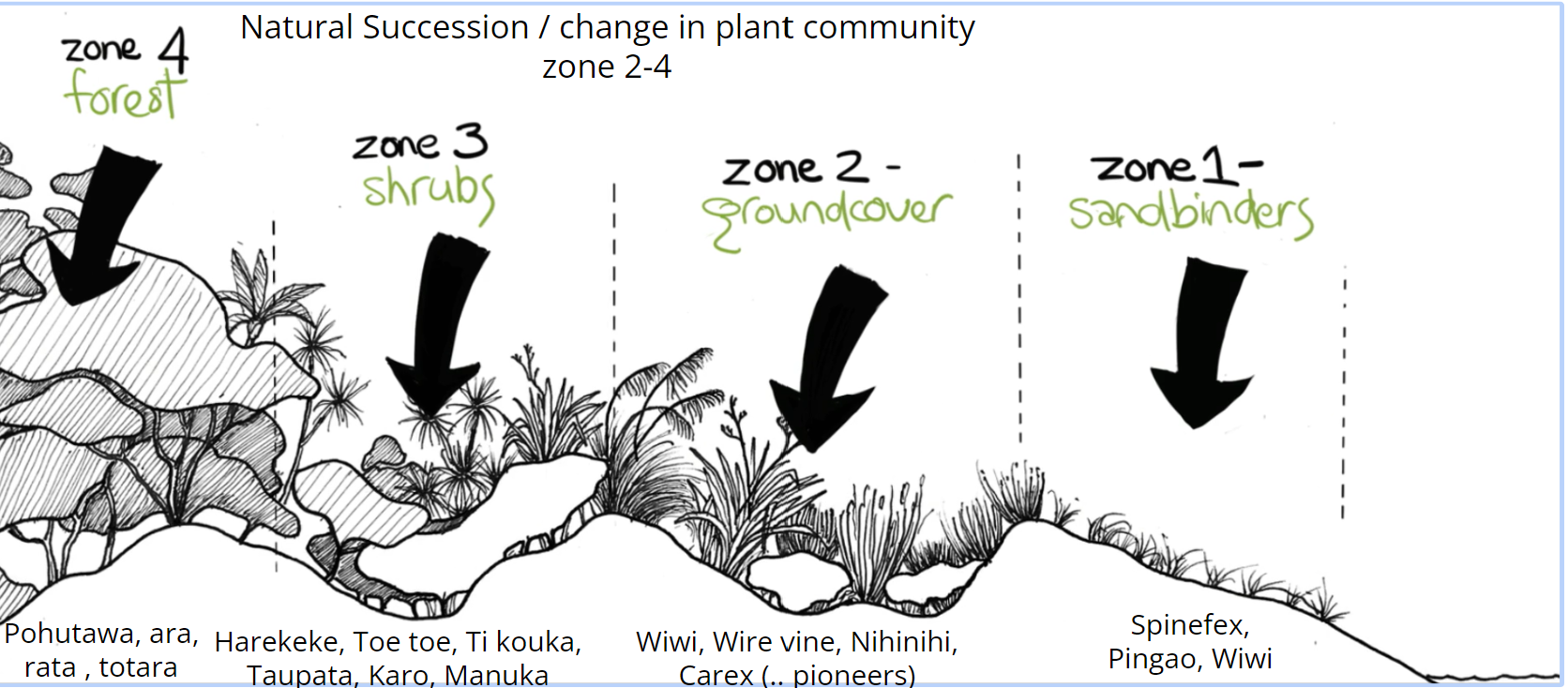
Here are Amy’s slides for reference.
Before we move on to the panel discussion, during the above presentations and questions by the audience, , here are Martin’s layman comments on some of those issues raised …
… Beach protection and dune restoration can be achieved in multiple ways and is dependent on the location, gradient of your beach, the predominant swell direction, average wave heights, sand types you have on your beach and a bunch of other factors. Point is, every beach and almost every part of your beach has slightly different macro and micro processes happening. And often these non-linear processes are overlaying each other. Sometimes cancelling each other out, sometimes joining forces.
Anyone who ever was in the Ngunguru Harbour entrance during a South Easterly Gale on the water will know what I am talking about. Coming back to the land based challenge, there are several so called “soft options” we can take. Once you have helped the beach to restore a healthy gradient, you support it to build up its natural coastal protection, dunes. To build and hold those dunes you can plant several plants. How to do this smartly was covered in Amy’s talk and the Q&A.
The Third Option (III) are hard options or hard structures. Examples of those are the fantastic protection done along the Tamaki Drive in Auckland from Mission Bay to St Heliers using naturalistic concrete.
In fact any of these “hard” and “soft” options have minimum and maximum life expectancy. Much smarter people than me have done research and decade long field work on these things. It is important to note, there is no one size fits all solution. Each beach, each property have to be looked at individually and in the wider context as well. To give an example, if a sea wall is build on one part of the beach, but not on other parts of the beach, over time swell, king tides, storms, cyclones, flooding and other tools in “moana’s toolkit” will start to find ways to compromise human built structures.
It is also worth noting that the different soft and hard options can have dramatically different price tags and consenting processes attached to them.

Source: Coastal Protection Options and estimated costs (Thames Coromandel District Council, Dec 2023)
To illustrate how complex this is, here two examples from our Tutuakaka Coast.
After Cyclone Lola ( end of Oct 2023) the seawall build around 1988 after Cyclone Bola in Whangaumu Bay on its lower end has started to be backwashed. What this means is, that what got behind the rocks and started to get squeezed against the dune. By doing this, the dune which was meant to be protected, is very fast eroding from behind. Near the reserve at the River end of Whangaumu Beach over the cause of a few days after Lola, slips have occured under a big Pohutukawa tree and a house with one stilt side for its second floor.


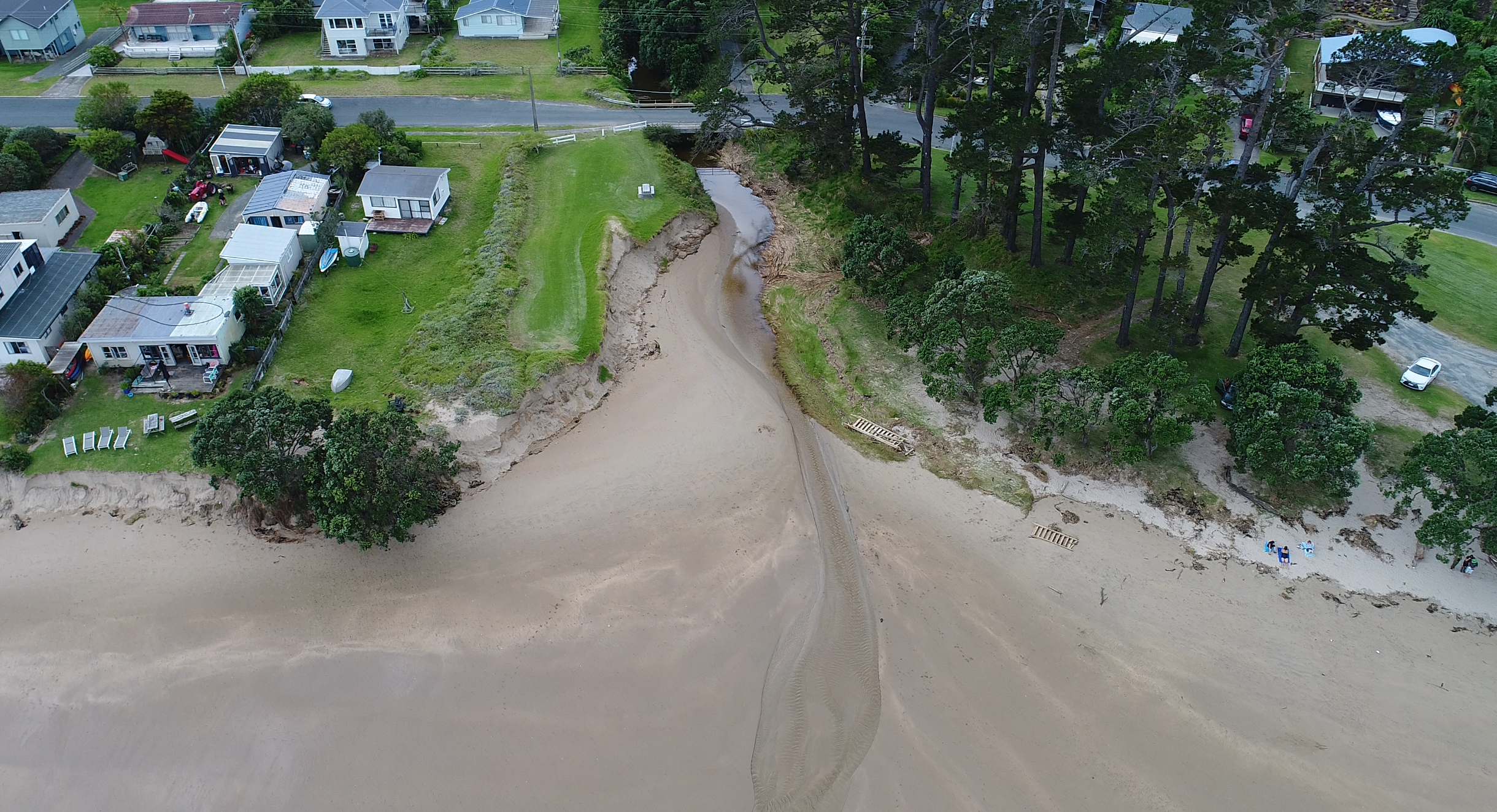
Source: Author; NRC Drone Footage from river mouth in Whangaumu Bay before Cyclone Gabrielle and Lola (2023)
The bank underneath has since given away. If nothing is done, within the next 2-3 storms either the Pohutukawa tree will slip and take a big chunk of the dune with it, or the bank where the house’s stilts are, will collapse. Neither events will be good for the beachfront owner nor the beach user who is in that spot when it happens. This shows that the transition between a high to a low to no rockwall on the same beach, can work for many decades. The unseen erosion still happens and with one or two events it can reach tipping point from being fine to not being fine anymore.
Another example is Matapouri. Residents decided to replenish their beautiful beach. They got consent to dredge their river and estuary. Triggering substantial ecological damage to shellfish stock, changed flow patterns and other unintended consequences. This so-called “soft” option also had to contend with adverse weather conditions and bad project management & timing. A sand redistribution (not a properly managed sand push up) was initiated despite know a storm would come. Rather than waiting for a sufficiently calm weather window, the contractor pushed ahead. The very expensive sand redistribution was hammered by a few storms in close succession shortly after the human intervention. The wonderful modelling done by the team, was anihalted by moana deciding to do quite different things.


A perfectly safe beach for kids to swim on before this human intervention, turned into a very steep, very dangerous, rip prone beach. And the expensive wooden beach stairs put in after the multimillion dollar sand distribution (not properly designed sand push up) went into Nirwana. As Councillor Scott McKenzie commented “sand was blowin in the wind” as millions of dollars funded by the community and councils.
What is the morale of these two anecdotes of “hard” vs “soft” options?
As a politician would respond, it depends … Me, as a scientist, would comment, with the non-lineariity of the processes happening all at the same time it is much too difficult for humans to fully understand, let alone model and predict reliably what is going to happen. So sometimes despite all good intentions, moana can decide on a whim to do things very surprinsingly different. Should we try to anticipate the ocean’s next move or should we take the most sensible approach and work with nature to get protection of assets we have for a little while and then face the white elephant in the room and move to higher and safer grounds. The latter is called climate adaptation. This topic will be covered in 2024 “ocean + climate” series in more detail. Watch this space …
It is suggested to start community science projects at selected Tutukaka beaches and monitor the variations of the coastline, sand dunes. This can be achieved by repeating observations at selected, fixed points on the beach and complemented with regular drone monitoring. Proper observations will allow the coastal community to see the natural variations and make the best decisions based on these. In some instances working with nature, in other instances retreating may be the best option. Without sufficient data some decisions can have unintended consequences. That should be avoided as much as possible, I think.
Panel Discussion and Q&A
We were really lucky to have a well informed and engaged audience of coastal residents fielding great questions to the panelists. Here is a high level summary of key questions/ discussions.
How is sea level rise impacting on Tutukaka Coast?
Andrew put up some forecast of up to 100cm sea level rise. That together with very localised land inundations (sinking) can have dramatic effects over time. Again, the planet had many dramatic changes in sea levels. Humans are not sophisticated enough to answer these questions very definite. The only thing which is very clear and undisputed, the only constant is change. How much and when, are the tricky parts (see video on sea level rise)
Can we build a rock wall and sand dune on top?
These are typically mutally exclusive. The reason being they have two different objectives. A rock wall changes the way how nature works. It leads to coastal squeeze (see video) and changes natural coastal dynamics. Sand dune restoration aims to work with nature and re-establish natural processes. Also check out this amazing video on how different rock walls function – in the first 2 minutes of the video.
What about Penguin nesting in Whangaumu if a natural dune restoration is done?
The rock wall near the river/ estuary end of the beach is currently providing shelter to local penguins. If the rock wall would be removed, those habitats would shift. There are examples around NZ where as part of similar structure removals, penguin nests have been safely migrated. Also see example from Wellington. In fact penguin numbers in those more natural rehousing lead to higher penguin numbers. None of the panelists are experts in this field. It is suggested to get relevant advice on this topic.
If I want to build a rock sea well where do I put it?
National Policy is very clear on this since 2010. Rock walls are only for protection of public not private assets. If a beachfront owner wants to build a rock wall, this has to be done on her/his property. There is an elaborate resource consenting process which can take years with expensive, council approved experts. The Northland Regional Council (NRC) has a lot of free resources explaining the resource consenting process in detail. The NRC staff are very helpful in explaining the steps required should you wish to pursue this avenue. I can recommend talking with NRC’s consenting team. A ten minute phone conversation can possibly save you tens of thousands of dollars and a lot of your precious time.
What I don’t understand is the objection to a ‘hybrid’ solution i.e. rocks at the toe covered by sand and planting. Isn’t that the best of both worlds?
There is no “objection” to ‘smart hybrid solutions’ per se, however my understanding is that in your suggested “hybrid” scenario, rocks are likely to get exposed over time.
In Matapouri, Kowharewa and other beaches old rocks from attempts to protect private property are resurfacing and impacting on all beach users, not just the people who started ‘protecting’ their beachfront assets.
Once that is happening new beach dynamics can lead to more damaging effects than not using rocks, tyres or wooden retaining walls in the first place. You can see this near the Whangaumu Bay reserve closest to the Ngunguru River. The rockwall is being backwashed. First slips have occurred. See images above. For the suggested “soft options”, nothing but sand and well planned planting is required. The consenting will be faster, cheaper and you will get protection by ‘working with nature’ more immediate ie months vs a year or longer. The resource consenting for “hard options” according to NRC are likely to be much longer, more expensive and possibly not successful.
However, I am not an expert in coastal resilience or resource consenting. Jim Dahm and other Coastal Resilience Scientists will be able to answer this question more competently. Please refer to the relevant, competent and experienced experts.
What is the availability of dune restoring, native plants?
Amy’s business Dunescape in Dec 2023 has about 25,000 spinefex, pingao, wiwi plants available. From seed collection through propagtion to plantable size it takes about 18 months. Therefore a long lead time is expected for bigger dune restoration projects. It should be noted that there are certain planting best practices and plant mainteance methods which should be followed. Amy will be happy to advise you and explain this further. Please note that some beautiful flowering, non native plants can have a detrimental effect on how dunes function.
What’s next in 2024...
In the New Year the Whangarei District Council (WDC) will use some of funding they received from the Department of Internal Affairs (DIA) to engage with coastal communities on climate adaptation and coastal resilience. Together with the Northland Regional Council (NRC) which is the coastal consentting authority in Tai Tokerau WDC plans to provide localised information sessions. Please contact your local councillor or the WDC/ NRC contact center.
NIC will change gear and run “art + ocean + climate” workshops in the New Year.
Check out the Climate Change Action Group activities and get involved.
Resources
As a community it would be great to find a solution which makes sense for most of us. And allows to preserve the pristine Tutukaka Coast environment we are blessed to live in.

The more people are well informed, engaged and doing things to protect our beautiful coast, the better. To get started, here are useful resources when thinking about climate adaptation & coastal resilience.
- Layman’s overview of Tutuakaka Coast specific coastal resilience challenges and opportunities (last updated 3. Dec 2023)
- A New Zealand Coastal Society publication on coastal adaptation will provide a useful starting point: https://www.coastalsociety.org.nz/media/view/publications/special-publication-5-coastal-adaptation/
- Helen Clark Foundation: https://helenclark.foundation/app/uploads/2023/11/HCF-WSP-Report-A-Shared-Future-2023.pdf
- Let’s Talk About Risk Framework, including a framework for designing natural hazard and community risk engagement: https://www.resorgs.org.nz/our-projects/risk-and-resilience-decision-making/lets-talk-about-risk/
- Video series of the Coastal Resoration Trust on dynamics of dunes, old and new approaches
- Thames Coromandel District Council on “Protecting our Coast” and costs of different coastal management methods
- Northland Regional Council (NRC)’s coast hazard assessment reports and resource consenting process
- Ministry of the Environment (MfE)’s “Coastal Hazard and Climate Change Guide”
- Department of Conservation (DOC) “New Zealand’s Coastal Policy (ratified in 2010)”
And some more researchy-type ones from the Deep South National Science Challenge:
- Adaptation by Mana Whenua: Initiatives, Challenges and Working with Councils https://ourarchive.otago.ac.nz/handle/10523/16245
- Just Adaptation – what does justice mean, and how can it guide adaptation planning and decision-making? https://ourarchive.otago.ac.nz/handle/10523/15268
- Community engagement for climate change adaptation: https://ourarchive.otago.ac.nz/handle/10523/15157
- Using mapping to support collaborative climate adaptation https://ourarchive.otago.ac.nz/handle/10523/16057
For coastal adaptation and information around coastal change (including sea level) etc. the best guide is the Ministry for the Environment’s guidance for local government which has been instrumental in developing many of the coastal adaptation programmes and projects around NZ. https://environment.govt.nz/publications/coastal-hazards-and-climate-change-guidance-for-local-government/
Also check out TCDC’s natural hazards portal
https://www.nrc.govt.nz/environment/natural-hazards-portal/, and NZSeaRise (https://www.searise.nz/maps-2) for the latest projections, that include allowances for whether land is moving up or down, and whether that negates or enhances sea level rise.
A few links below and I have attached our ‘adaptation menu’ we have as part of our shoreline management plan project work.
https://climateandnature.org.nz/solutions/new-zealand-ecosystems/coastal-dunes/
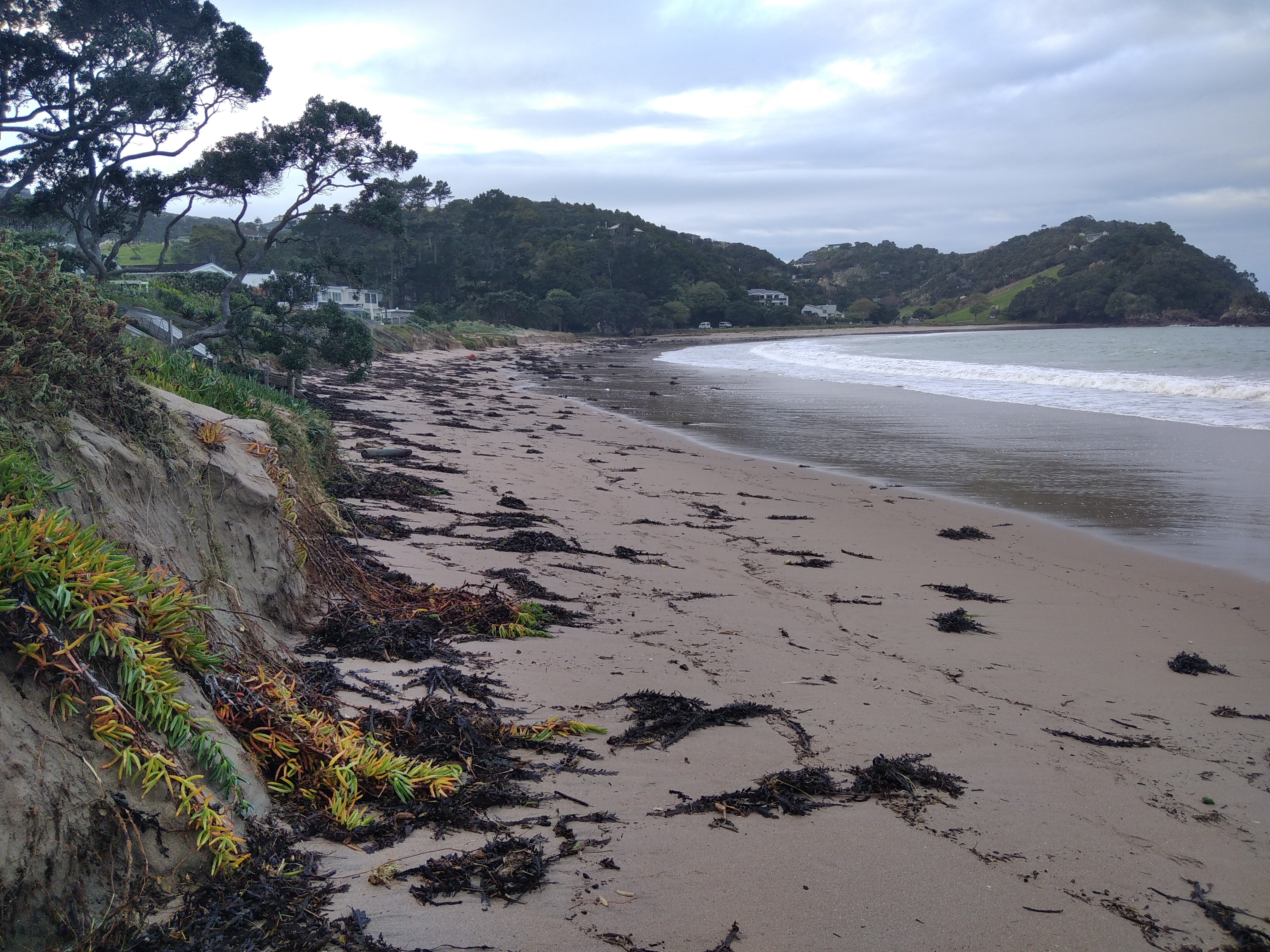
And here some images from the amazing Tutukaka Coast what strange things we humans sometimes do…
Matapouri – Feb 2023


Kowharewa Bay – Nov 2023

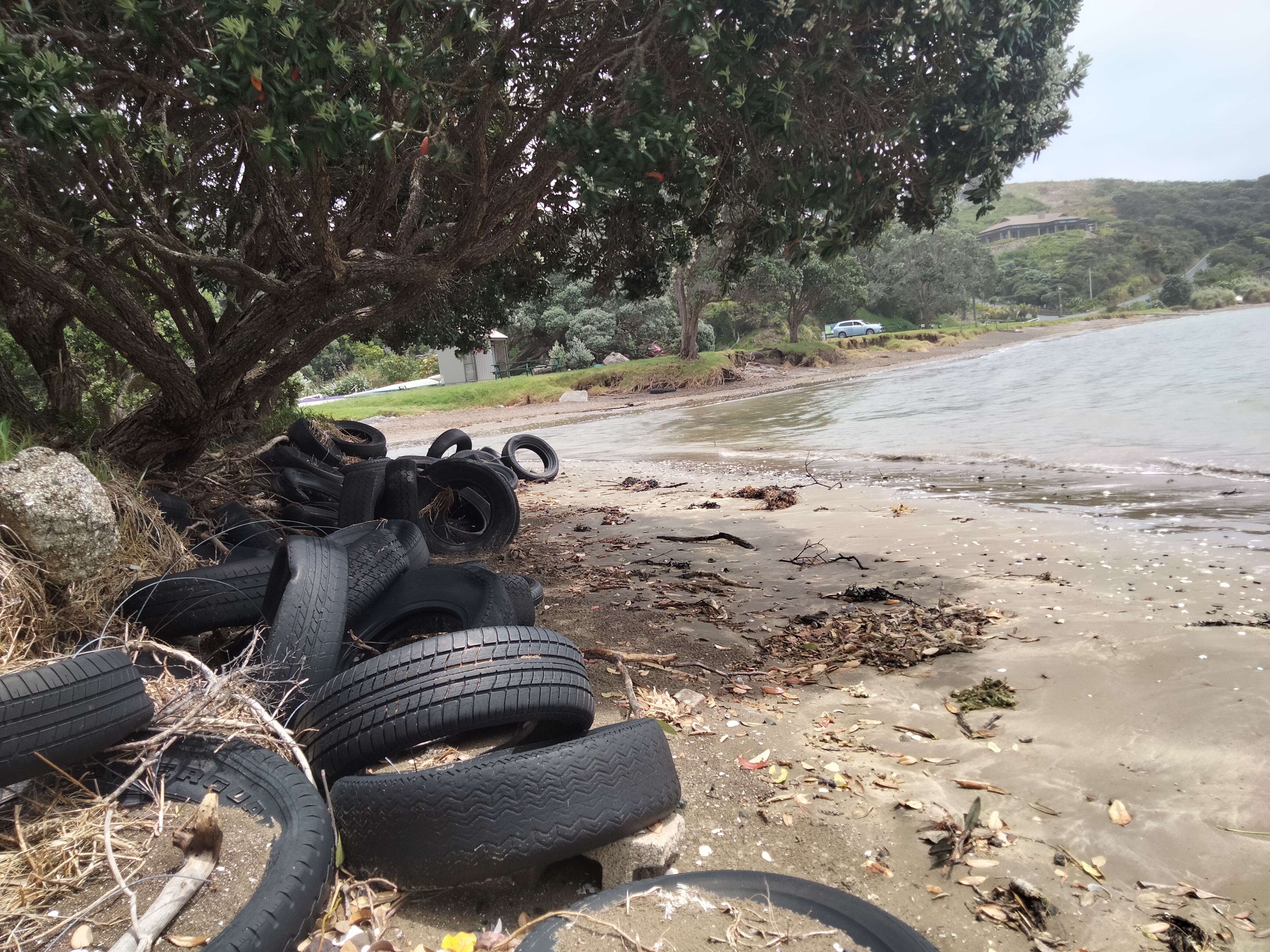

Whangaumu Bay – Feb 2023


 Northland Innovation Centre